What Does a SOC Do? Six Core Jobs
A SOC monitors your systems, sorts the alerts, investigates the real ones, contains attacks, helps you recover and then fixes the weak spots. Here is each job in plain terms.
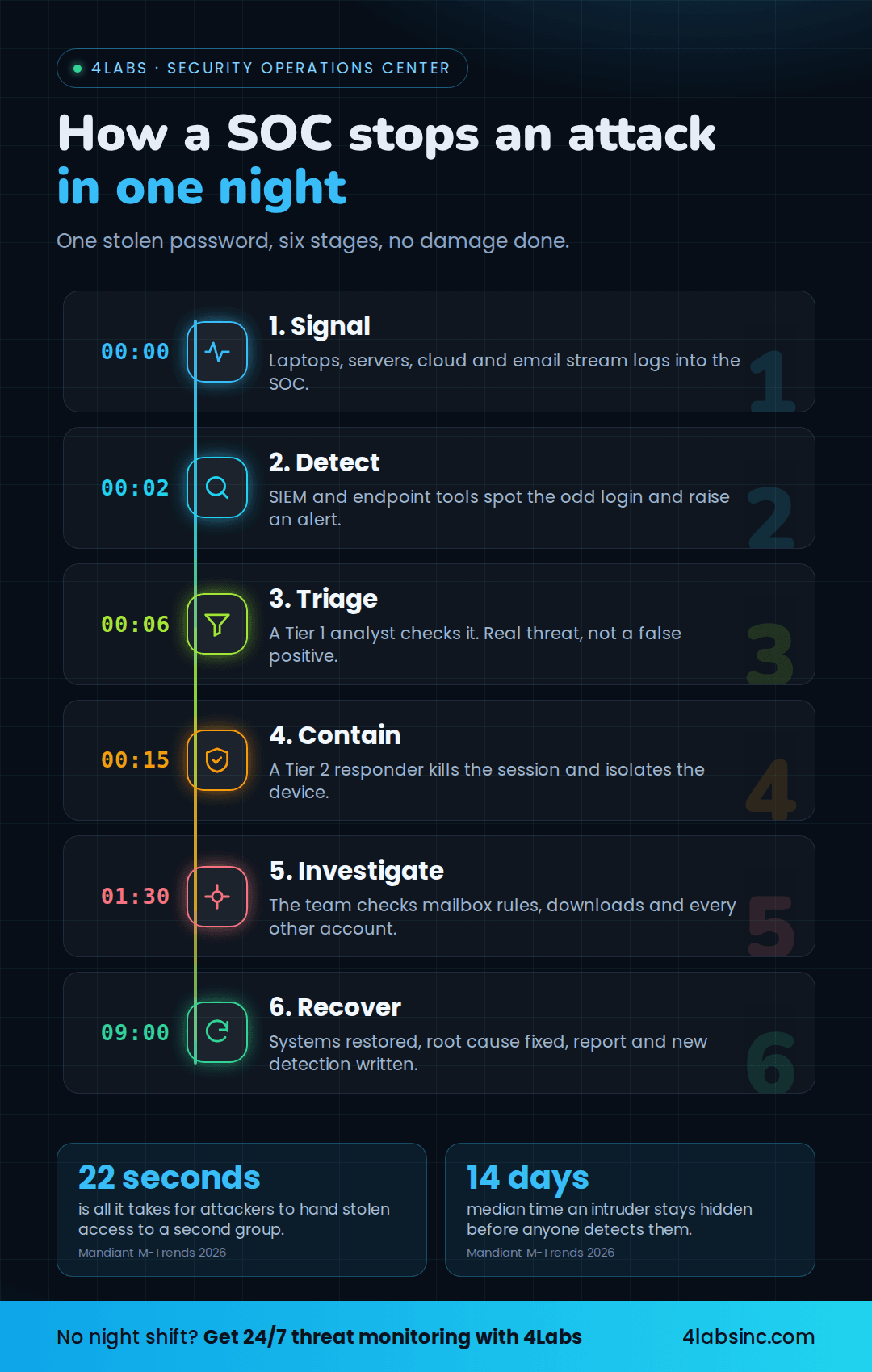
How a SOC stops an attack in one night.
1. Monitor Everything, 24/7
The SOC collects logs and signals from every corner of your business: laptops, servers, firewalls, cloud accounts, email and applications. Those feeds land in one platform so nothing hides in a silo.
Coverage matters more than volume. If a system sends no logs, the SOC is blind to it. Good teams map every asset first, then check that each one reports in. Solid network security gives that monitoring something clean to watch.
2. Triage Alerts and Cut the Noise
Monitoring creates alerts, and most of them are harmless. Triage is the work of sorting them fast: real or false positive, urgent or routine.
Tier 1 analysts handle this queue. They enrich each alert with context, such as who the user is and whether the device is patched. Clear rules and tuned detections keep the noise down, which protects the team from alert fatigue.
3. Investigate and Hunt Threats
When an alert looks real, the SOC digs in. Analysts trace what happened, which accounts were used and what the attacker touched. They map the behavior to known tactics using frameworks such as MITRE ATT&CK.
Good teams also hunt without an alert. They search for quiet signs of intrusion, guided by threat intelligence on current attacker methods. That is how long-running, low-noise attacks get found.
4. Respond and Contain
Speed decides the damage. The SOC follows a written playbook: isolate the device, disable the account, block the IP address, reset the credentials. Each step is recorded.
Severe incidents escalate to senior responders and, when needed, to management and legal. A tested incident response plan means nobody improvises at 3 a.m.
5. Recover and Report
After containment, the SOC helps bring systems back safely and confirms the attacker is gone. Then it writes up what happened, what was affected and what stopped it.
Those reports do double duty. They feed better detections, and they provide the evidence auditors ask for. Pair them with regular IT audits for compliance to keep frameworks such as ISO 27001, PCI DSS and HIPAA on track.
6. Harden Defenses Before the Next Attack
Every incident points to a gap. The SOC turns that lesson into action: patch the flaw, tighten a rule, remove an unused account, add multi-factor authentication where it was missing.
Vulnerability management belongs here too. So do safer engineering habits, from website security best practices to security testing in the software development lifecycle.